


eBay online shopping & selling
eBay Mobile
I use eBay less like a digital department store and more like a huge, constantly changing marketplace that fits in my pocket. That distinction matters. The app is most useful when I want to find a specific item, compare many listings, or sell something that might be difficult to place through ordinary local channels. It is free, belongs to the Shopping category, and is developed by eBay Mobile. After spending time with it as both a buyer and a potential seller, I found that its strongest quality is not simply the number of products available. It is the way the app brings searching, listing comparison, bidding, purchasing, and selling into one mobile workflow.
The experience is clearly aimed at teenagers and older users, with a Teen content rating. It has been available since February 17, 2010, and its scale is easy to understand from its store presence: the app has an average rating of 4.6 from around five million ratings, with roughly 688 thousand written reviews and more than 100 million installs. Those figures do not guarantee that every transaction will be smooth, but they do explain why eBay feels more like an established marketplace than a small shopping app.
Why the marketplace search is the app’s defining capability
The capability I kept returning to was the marketplace search. On a normal retail app, I usually search for a product and choose between a few standardized offers. Here, the same search can lead to new goods, used items, collectibles, replacement parts, older models, bundles, and listings that differ greatly in condition or seller presentation. That variety is the main reason to use this app instead of a conventional online retailer.
Related News

How Temu: Shop Like a Billionaire Redefines Luxury Shopping

How Walmart: Shopping & Savings Redefines Mobile Retail

Why Shop: All Your Favorite Brands Dominates Mobile Shopping
In practical terms, the search tool is valuable when I know what I need but do not necessarily need a particular brand-new version. A replacement accessory for an older device, a discontinued book edition, a spare component, or a secondhand item can be easier to locate in a marketplace with many independent sellers. The trade-off is that I have to do more thinking. The app gives me access to choice, but it also makes me responsible for comparing the details behind that choice.
I found that the best results came from using specific words rather than broad shopping language. A general search may produce an overwhelming mixture of conditions and variations. Adding the model, size, color, edition, or compatibility detail helps narrow the right kind of listing. This is one of the first useful habits I would suggest to a new user: search as if you are describing the exact item to another person, not as if you are browsing a store aisle.
Related News

Why WhatsApp Messenger Still Makes Everyday Communication Feel Easy

Jurassic World: The Game Is the Better Dino Tycoon for Strategic Players

Threads in Real Life: Who Should Join, Lurk, or Leave

How SHEIN Turned Shopping Into an Endless Content Feed

How to Make Fortnite Feel Smarter on Mobile

Should You Switch to Microsoft Outlook on Mobile?
The app’s marketplace model also changes how I judge a good deal. The lowest visible price is not automatically the best offer. I look at the item condition, the seller’s description, the total cost shown before committing, and whether the listing actually matches the version I need. A cheaper item with vague information can be a worse choice than a slightly more expensive listing with clear photographs and precise details.
What browsing feels like on a phone
Browsing on a phone works well for quick checks. I can look up an item while commuting, compare several listings, or save a possible purchase for later instead of making a decision immediately. That makes the app particularly convenient for products where availability changes often. I do not have to sit at a computer to find out whether a rare or older item is currently being offered.
Still, a small screen makes careful comparison less comfortable. Product photographs may look convincing at first glance, but I often need to open them individually and read the description slowly. When listings use different wording for the same product, it takes patience to work out whether they are genuinely comparable. For an inexpensive impulse purchase, that extra effort may not be worthwhile. For a collectible, replacement part, or used electronic item, it is time well spent.
Gallery
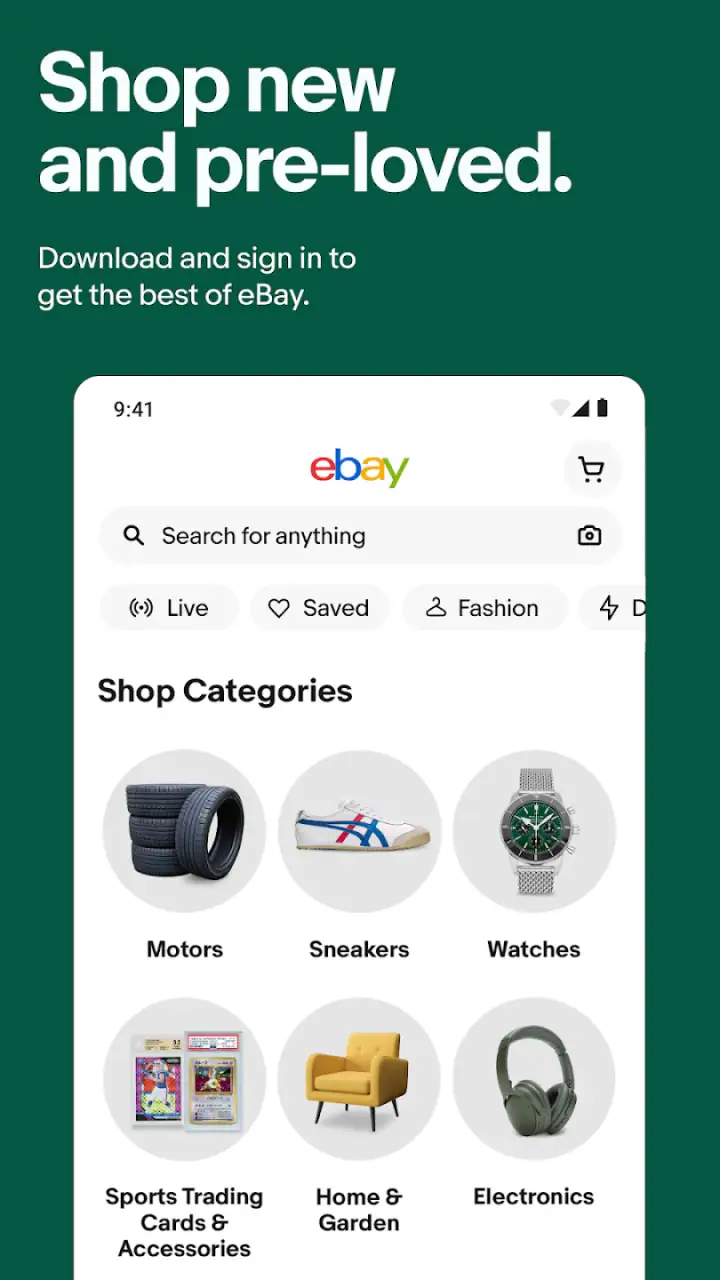
I also prefer to treat the first results as a starting point rather than a final recommendation. Marketplace ranking can expose me to relevant offers, but it does not replace my own inspection. The app helps me discover possibilities; it does not remove the need to check fit, condition, included accessories, or seller information.
How I use it in a real buying workflow
My usual process begins with a narrow search, followed by a quick scan of several listings. I first separate the results by the condition I actually want. If I am looking for something used, I do not compare it casually with a new listing without considering what “used” means in that particular case. If I need an exact model, I check the photographs and wording for identifying details instead of relying only on the title.
Next, I compare the complete purchase cost rather than focusing on the item price alone. This is especially important on a marketplace, where different sellers can present similar products in very different ways. I also read the seller’s description before making a decision. A title may be short and attractive, while the description explains a missing component, cosmetic mark, or limitation that changes the value of the offer.
One less obvious advantage is that the app supports a slower decision style. I can use it to investigate what an item is worth before buying or selling. For example, if I find an old camera in a cupboard, I can search for similar listings and study how sellers describe condition, included parts, and model variations. That does not tell me exactly what my item will sell for, but it gives me a much better starting point than guessing from memory.
For sellers, the mobile workflow is useful because it reduces the distance between noticing an unwanted item and preparing it for sale. I can photograph the item, write a description, and manage the listing from the same general environment. The convenience is real, but I would not confuse convenience with automatic success. A rushed listing with poor photos or an unclear title can make a good item look unreliable.
A selling routine that avoids common mistakes
When I imagine listing something, I would begin by identifying exactly what is included. This sounds basic, but it is one of the most important details in a marketplace listing. A buyer needs to know whether the original box, charger, manual, accessories, or replacement parts are present. If I leave those details unclear, I create unnecessary questions and make the item harder to compare with other offers.
I would then take photographs that show the item honestly, including wear that a buyer would reasonably want to see. Clear images are not just decoration; they help establish trust and reduce misunderstandings. A description should explain the item in ordinary language, including its condition and any known limitation. I would rather write a straightforward listing that attracts the right buyer than use exaggerated wording that creates disappointment later.
Another useful practice is to search the app before setting expectations. Similar listings can reveal whether my item is common, unusually specific, or part of a crowded group of offers. That information helps me decide whether selling on a large marketplace is worth the effort. If many sellers offer nearly identical products, I may need to provide better presentation or accept that the item will take patience.
The best everyday scenario for this app
The clearest scenario for me is replacing an older item that is no longer easy to find in ordinary shops. Imagine that a family member needs a particular remote, accessory, book edition, or component for equipment that still works. A mainstream retailer may show only newer alternatives, while a local store may have nothing suitable. In eBay, I can search by the exact model and compare several conditions and sellers from the sofa.
The app is also strong when I am willing to consider secondhand goods. Someone looking for a discontinued game, a vintage household object, an older piece of clothing, or a collectible may gain more from variety than from a perfectly standardized retail experience. The marketplace can connect a very specific request with a seller who happens to have that item, which is something a normal catalog often cannot do.
There is a practical emotional benefit too. Selling unused possessions can feel more manageable when I can begin with the phone in my hand rather than planning a full trip to a resale shop. I can identify the item, research similar offers, and decide whether the potential return justifies the work. That makes the app useful for occasional decluttering, especially when the item may appeal to a specialized buyer.
However, I would not use it for every urgent purchase. If I need a basic product immediately, a local retailer or a standard online store may be simpler. The marketplace is at its best when the item is specific, hard to find, discontinued, collectible, or worth comparing across many independent offers.
Questions I would ask before buying
The first question is whether the listing describes the exact item I need. Similar titles can hide important differences in model, size, edition, or compatibility. I would check the photographs and description together, because one may reveal a detail the other does not.
The second question is whether the condition suits my expectations. “Used” can cover a wide range of experiences, and even a clean photograph cannot replace careful reading. If the listing leaves me unsure about a central detail, I would keep searching rather than assume the best.
The third question is whether the time and effort match the value of the purchase. For a rare item, detailed comparison is worthwhile. For something inexpensive and widely available elsewhere, the extra marketplace research may not be a sensible use of my time.
Finally, I would ask whether I am comfortable making a decision among independent listings rather than choosing a single standardized product page. That is the central mental adjustment. The app offers breadth, but breadth requires judgment.
The trade-offs behind the large selection
The biggest strength and weakness are the same thing: there are many different kinds of listings. Variety improves the chance of finding something unusual, but it also increases the chance of encountering inconsistent descriptions, uneven photographs, or offers that are difficult to compare directly. I cannot browse passively and expect the app to make every important distinction for me.
This is where eBay differs from a typical retailer. A retailer usually gives me a more uniform product page, consistent presentation, and a simpler path from search to purchase. That is convenient when I already know the product and want a predictable transaction. eBay is more useful when the standard retail catalog is too limited, but the price of that flexibility is extra inspection.
It also differs from local resale platforms. Local services may be better for a quick nearby exchange, especially when I want to avoid shipping or need to see an item in person. eBay is more suitable when I want access to a broader pool of buyers or sellers and am willing to work within a more structured online marketplace. The better option depends on whether reach or immediacy matters more.
Compared with auction-focused browsing, the app can feel broader because it includes ordinary marketplace shopping as well as listings that invite more active comparison. I would not approach every item with the same urgency. Some purchases reward waiting and research, while others are better handled by choosing a clear offer and moving on.
There is also a risk of over-browsing. The abundance of alternatives can turn a simple purchase into a long session of comparing small differences. I have found it helpful to decide my priorities before searching: exact compatibility, acceptable condition, maximum total cost, or speed. Without that limit, the large selection can make me less decisive rather than more informed.
When I would choose another option
I would choose a conventional retailer when I need a new, common item with predictable specifications and minimal research. I would choose a local marketplace when speed, pickup, or face-to-face inspection is more important than access to distant sellers. I would also avoid using a large marketplace for a purchase that is so inexpensive and ordinary that the comparison process costs more attention than the item deserves.
For selling, I would think carefully about the item’s likely audience. A specialized product may benefit from being visible to interested buyers beyond my local area. A bulky everyday object may be more practical to sell nearby. The app is not automatically the best selling venue simply because it is large; the item, its size, its condition, and the effort required to prepare the listing all matter.
My other reservation is that mobile convenience can encourage rushed decisions. Because I can search or list from almost anywhere, I may be tempted to skim information. I get better results when I treat the phone as a tool for careful comparison, not as a reason to skip it.
Who gets the most value from the mobile experience
I think the app suits people who enjoy finding specific things rather than simply choosing from a short list. Collectors, repair-minded shoppers, bargain hunters, people looking for discontinued products, and occasional sellers can all benefit from its marketplace scale. It is especially useful for someone who wants to research an item and act without being tied to a desktop computer.
It is also a good fit for a seller who wants to test whether an unused possession has a wider audience. The mobile format makes it easier to begin, but the seller still needs to photograph accurately, describe completely, and set realistic expectations. The app lowers the barrier to creating a listing; it does not replace good judgment or good presentation.
I would be more cautious about recommending it to someone who wants every purchase to feel like a standard retail checkout. If you dislike comparing conditions, reading seller descriptions, or deciding between several forms of the same product, a conventional store may feel calmer. The app rewards curiosity and patience more than passive convenience.
For parents and younger users, the Teen rating is worth keeping in mind when deciding how the app fits into a household. Shopping through a broad marketplace is not the same as browsing a tightly controlled catalog, so I would encourage careful purchasing habits and attention to the details of each listing.
After using it, my view is straightforward: eBay is strongest when the search itself is part of the value. If I need an exact, unusual, older, or secondhand item, the app can save me from visiting several stores or accepting the first substitute I find. If I only want a routine product with no comparison work, another shopping option may be faster and less demanding.
The app’s free price makes it easy to try, and its long availability and large user base give it the feel of a mature marketplace. Still, I would recommend it with one condition: use the abundance deliberately. Search precisely, inspect the listing, compare the whole offer, and decide whether the item justifies the effort. When I follow that approach, the mobile experience becomes genuinely useful rather than merely busy.
My final recommendation goes to shoppers who value access and sellers who have something that needs a wider audience. The central benefit is not that every deal is perfect or every listing is equally clear. It is that the app gives me a practical way to investigate possibilities that ordinary retail often leaves out. For the right kind of purchase, that difference is substantial.
FAQs for eBay online shopping & selling
What features does the eBay app offer to buyers and sellers?
The eBay app provides a seamless platform for both buyers and sellers. Buyers can enjoy features like detailed product descriptions, secure payment options, and personalized recommendations. Sellers benefit from tools for listing items, tracking sales, and managing shipping. The app also includes notifications, customer support, and a user-friendly interface to enhance the overall shopping experience.
Is the eBay app safe to use for online transactions?
Yes, the eBay app is designed with security in mind. It employs encrypted payment methods and offers buyer protection policies to ensure safe transactions. Users can also report suspicious activities, and the app includes options for two-factor authentication to add an extra layer of security. Always ensure you are downloading the app from official sources to avoid scams.
Are there any fees associated with using the eBay app for selling items?
While downloading and using the eBay app is free, sellers may incur fees when listing or selling items. This includes insertion fees for listings and final value fees when an item is sold. The exact fees can vary based on the item's category and selling price. Users can refer to eBay’s detailed fee structure on their website for more information.
How can I resolve issues with items purchased through the eBay app?
If you encounter issues with a purchase on the eBay app, you can reach out to the seller directly through the app's messaging system. If the issue is unresolved, eBay offers a resolution center where you can open a case. The app also supports refund and return policies, which can be initiated if items are not as described.
Does the eBay app support international transactions and shipping?
Yes, the eBay app supports international transactions and shipping, allowing users to buy and sell items globally. Sellers can list items for international shipping, and buyers can select worldwide shipping options. However, shipping costs and delivery times may vary based on the destination, so it's important to review shipping details before completing a transaction.
Pros
- User-friendly interface with easy navigation.
- Wide variety of products available globally.
- Secure payment options for transactions.
- Auction feature for potential bargains.
- Strong buyer protection policies.
Cons
- Occasional issues with scam sellers.
- High shipping costs for some items.
- Inconsistent customer service experiences.
- App notifications can be overwhelming.
- Complex return policies for certain items.


